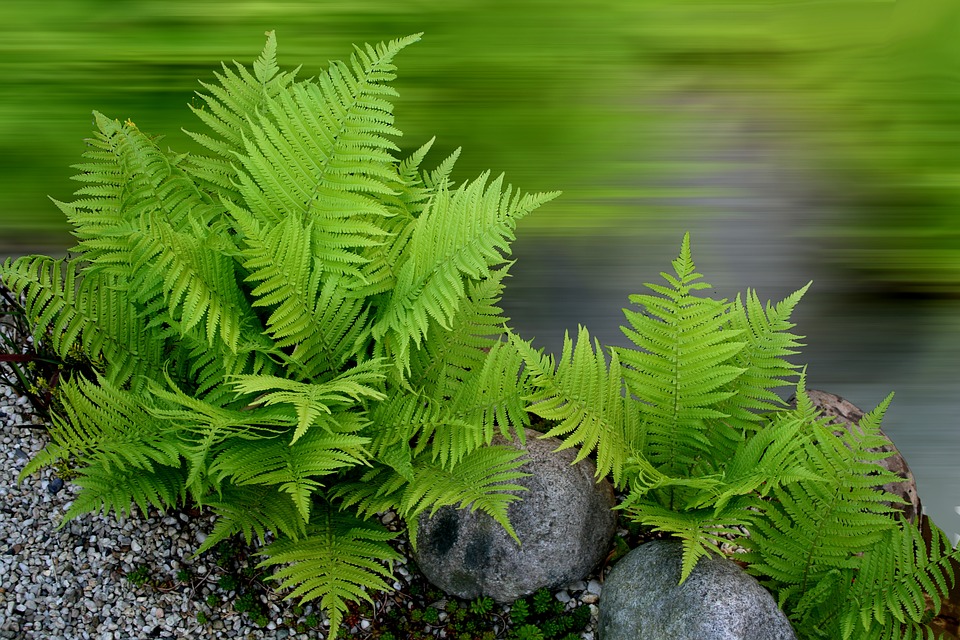
Use ferns where you want the garden to stay interesting between flowering seasons. Their fronds give a bed shape and texture even when little else is in bloom. Choose the fern for the light and moisture you have, then give it room to reach its mature size. “Fern” covers many plants with different needs, so a label is more useful than a general rule about shade.
Find the right spot first
Some ferns do well in damp ground. Others can manage a somewhat drier bed once established, especially where the soil has organic matter and they receive water during dry spells. That does not make all ferns drought tolerant. Likewise, a few handle more sun than people expect, but strong afternoon sun may scorch a fern suited to cool shade. Observe the bed through the day before choosing one.
If you are filling a space beneath trees, check whether their roots have left the soil dry. Shade and moisture are separate questions. Our shade garden article explores more planting options for those spots, and Soil Basics is a useful place to start if the ground itself needs attention.
Use the fronds as part of the design
A group of ferns can soften the edge of a bed, while a single distinctive plant draws the eye to a container or a sheltered corner. The original article suggests Southern maidenhair in a pot and names autumn, Christmas and Japanese painted ferns as other choices. Those names describe different looks, but they do not all call for identical growing conditions. Check the plant you are buying before arranging several together.
Ferns can work among flowering perennials when you want leaves to carry the view after the flowers fade. Mix frond shapes and heights deliberately so one plant does not disappear behind another. For another approach to a bed that holds interest beyond its flowers, see Beginning Perennials.
Once established, a fern suited to its site may need little intervention. Still, inspect it when weather changes: dry soil, damaged fronds or feeding marks deserve a closer look. The old claim that insects, diseases and browsing animals never bother ferns goes too far. The better bet is a well-matched plant and a quick check now and then.