You do not have to prune a hydrangea to make it bloom. If it has room to grow, leave the healthy stems alone and take out dead wood when you see it. If the shrub needs shaping, first find out which kind you have: cutting at the wrong time can remove next year’s flowers.
Which hydrangeas flower on last year’s stems?
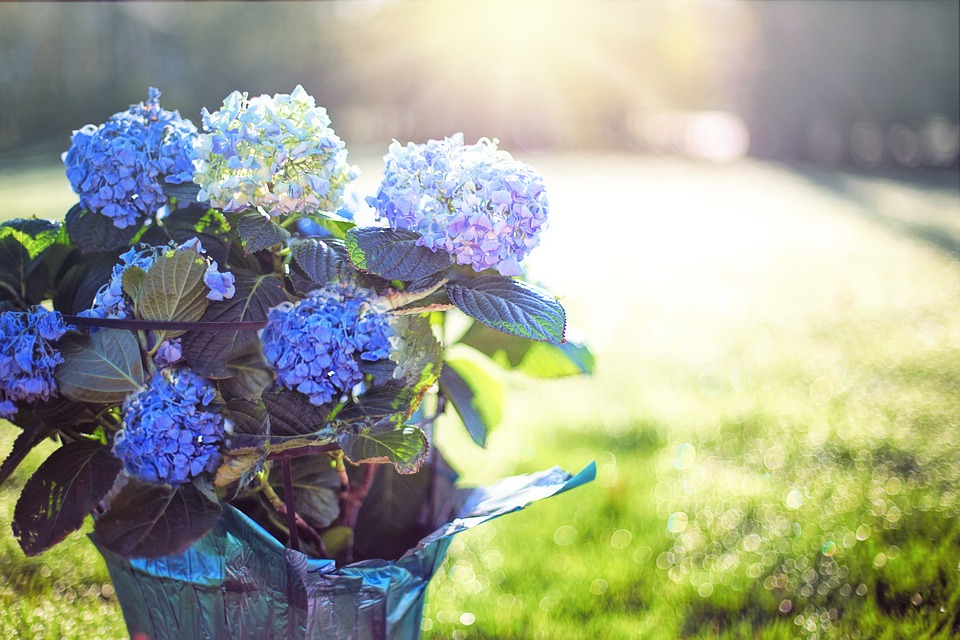
Many mophead and lacecap hydrangeas (Hydrangea macrophylla) and oakleaf hydrangeas (H. quercifolia) set their flower buds on old wood. A mophead often has the familiar rounded blue or pink flower heads; lacecaps have flatter ones. Oakleaf hydrangeas have leaves shaped rather like oak leaves and typically bear cone-shaped blooms. Those clues help, but check a plant label if you have one, since flower color alone will not identify the pruning rule.
If one of these shrubs is outgrowing its spot, shape it shortly after it flowers. Try to finish before the plant sets next year’s buds rather than relying on a fixed calendar date; the window depends on the plant and the season. Cutting it back in autumn or early spring may remove buds that have already formed. Some newer macrophylla varieties also bloom on new growth, so follow the guidance for your particular cultivar if you know it. For help telling the groups apart, see our guide to growing hydrangeas.
What about panicle and smooth hydrangeas?
Panicle hydrangeas (H. paniculata), including plants sold as Peegee or Limelight, and smooth hydrangeas (H. arborescens), including Annabelle, flower on growth made in the current season. They can generally be shaped while dormant in late winter or early spring, before new growth gets under way. That is more useful than a blanket rule to prune in any season: cutting off growing flower stems in summer can still cost you that season’s display. Panicle hydrangeas are also sometimes trained into a small tree form, which calls for more deliberate shaping than a shrub does.
How much should you remove?
Start with dead or damaged stems rather than cutting every stem to the same height. Step back and look at the shrub before taking more off. If its size is the recurring problem, heavy yearly pruning will not turn a large variety into a small one; choosing a plant that fits the space is the easier long-term answer. The same patient approach helps with other woody plants in the garden; our spring clean-up tips begin with broken branches and a look at the plant’s shape. Nature’s Friends Landscaping can help identify a hydrangea and decide whether it needs pruning at all.