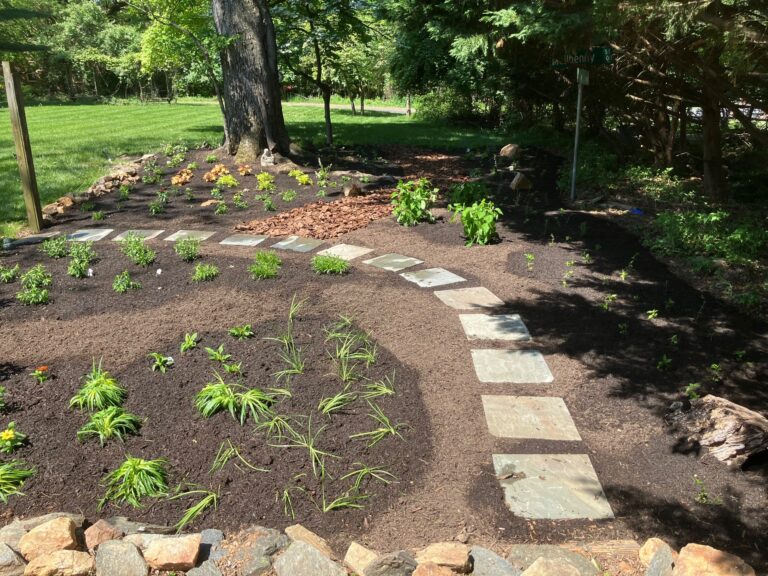

Ornamental grasses give a bed height, texture and movement without asking every plant to flower at once. Choose by the grass’s mature size and light needs first. A graceful clump near a path can be lovely; the same plant set too close to a walkway may spend its life being cut back.
Where do tall grasses make sense?
A tall grass can mark a boundary or soften a view, but it needs room to spread to its mature width. Pampas, fountain grasses and miscanthus are sometimes chosen for this purpose. Those names cover very different plants, and some can spread aggressively or be unsuitable in a particular area. Check the exact variety and local guidance before planting, especially near a natural area. If you want a screen, think about the view in winter as well as summer: a grass that dies back or is cut down will not give you year-round privacy.
The separate Grasses tip describes leaving seed heads standing through winter and cutting back before spring growth. That approach can keep their shape in the garden longer, when the selected grass is suitable for the site.
How can grasses work in a mixed bed?
Little bluestem, switchgrass and blue oat grass are among the choices for mixing with perennials. Their heights and growing conditions differ, so look up the particular plant instead of treating them as interchangeable. Purple fountain grass offers a burgundy note, but it is commonly grown as an annual where winters are too cold for it. Pairing a grass with flowering plants can give a bed a different outline even after the flowers fade; our perennial support tips also look at how plant shape affects a bed.
Is there a grass for shade?
Most of the grasses discussed here prefer sun. Japanese forest grass is a useful exception for a shady spot, including variegated forms sold as Aureola and All Gold. Blue fescue makes a low mound in a brighter position. A smaller grass can work in a pot, but the pot’s soil will dry differently from a planted bed, so keep an eye on it. Our container guide explains the practical side of choosing a pot and keeping its plants watered.
Once established, many ornamental grasses tolerate some dry weather, but new plants still need attention while they settle in. Find out whether the particular grass is evergreen or dies back before trimming it; for many deciduous types, cutting back old growth in late winter or early spring makes space for new leaves. Nature’s Friends Landscaping can help choose a grass for the actual light and room in your garden.