
Cooler fall days can be a good time to plant a tree. The air is less stressful than summer heat, and soil may still be warm enough for new roots to develop. That makes fall a useful planting window, especially for many deciduous trees, though the right timing depends on the tree and the local weather. If the ground is frozen or a new planting cannot be watered, wait for a better opportunity.
Pick the spot before the tree
Start with the size the tree will reach, not the size of the one you can carry home. Check its expected height and width against the room available above and beside it. A tree that fits the hole today may eventually crowd a building or a line overhead. Making a Good Tree Choice looks more closely at how to match a tree to a site.
Walk the space from more than one angle. A canopy that looks right from the street still needs room over paths and around other plants. Choosing the location before digging saves you from trying to correct a poor fit through repeated pruning later.
Set the root ball at the right depth
Handle the root ball with support so it stays intact. A broad planting hole gives roots room to move into the surrounding soil; the older article suggests roughly twice the root ball’s width. The important depth rule is simpler: do not set the tree deeper than it was growing. Locate the top of the root ball and keep the root flare from being buried. Backfill with the soil you removed, taking care not to leave large air gaps.
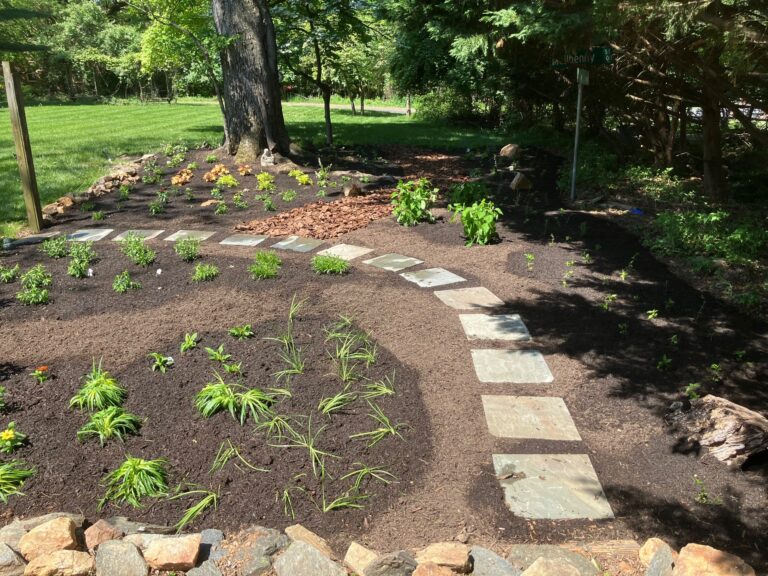
Once the tree is planted, spread natural mulch around it to help protect the soil, leaving a clear gap at the trunk. Mulch piled against bark holds moisture where it is not wanted. Our mulch basics article explains how to leave that space.
Keep checking water through the first seasons
Fall planting still calls for watering. Check the soil near the root ball and water thoroughly when it is drying out; rain, soil type and temperature all change how often that will be. Reduce watering when the ground is cold or frozen, then check again as it warms in spring. The work is not over after the first soaking. Keep an eye on the tree through its first warm season, particularly during dry spells. For more on that first stretch of care, see Time to Plant a Tree.