
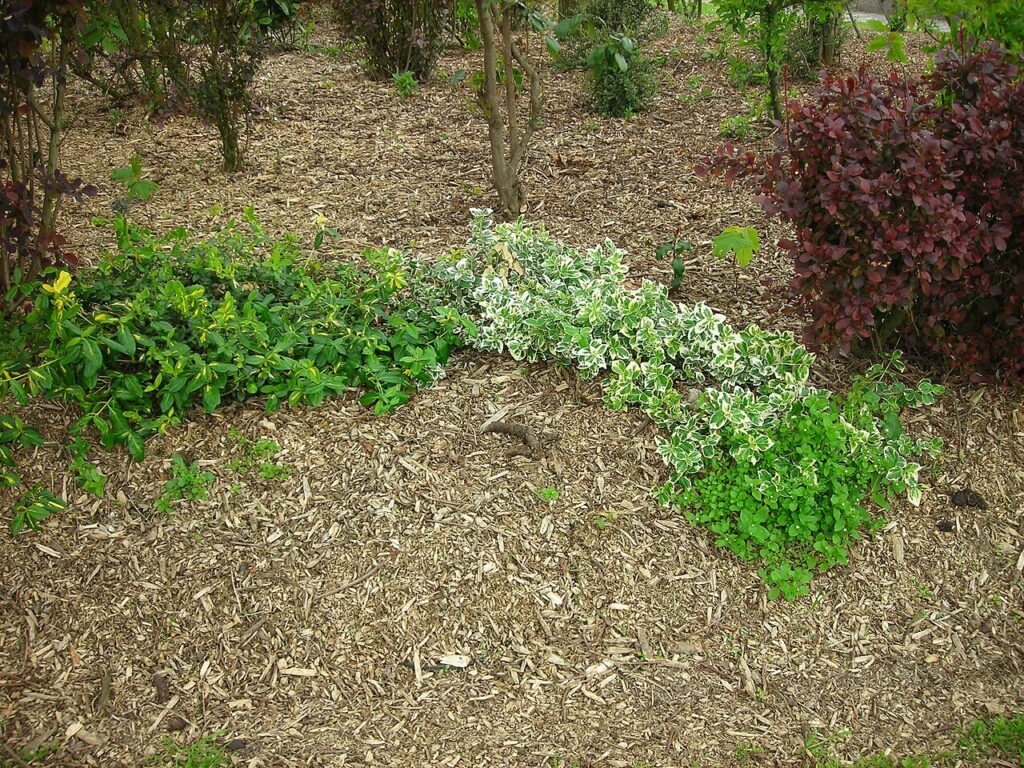
Organic mulch is a useful covering for many planting beds: it helps the soil hold moisture and moderates temperature, then gradually breaks down. The main thing is to spread it across the bed while leaving the stems of flowers and the trunks of trees and shrubs clear.
Which mulch belongs in your bed?
Wood-based and other organic mulches change as they age. As they break down, they add organic matter to the bed and eventually need replenishing. If you are working on the soil beneath an older planting, our soil basics post explains why it is worth paying attention to what is under the mulch too.
Stone and plastic do not break down into soil. They may suit a particular location or a preference for a lasting surface, but they will not contribute organic matter the way a plant-based mulch does. Think about the plants that will grow there and how you will tend the bed before choosing a covering simply because it keeps its appearance.
When should you spread it?
Early spring and late fall are convenient times to work around many garden plants because some perennials and annuals are not above ground. You can mulch at other times as well; just take more care around visible stems and emerging growth. A spring application can help slow moisture loss as the weather warms. In fall, mulch can help limit swings in soil temperature around plant roots.
There is no need to assume every bed must be mulched twice a year. Look at what remains from the previous application and whether bare soil needs covering. Your budget and the condition of the bed matter more than a fixed calendar.
How do you keep mulch off plants?
Spread it over the soil, then pull it back from the base of each plant. Mulch piled against a perennial stem can keep it damp and encourage rot. Against a tree trunk, a mound can hold moisture against the bark. Make a broad ring over the surrounding soil with a clear gap at the trunk instead. Our mature tree maintenance article explains why protecting the trunk matters.
Bagged mulch is manageable for many homeowners; bulk delivery can make more sense for a larger job if you have a way to move it around the property. Nature’s Friends Landscaping can look at the beds, suggest a material and handle the spreading if you would rather have help. For another way to cover planting soil, see the discussion of using chopped fall leaves in beds.


